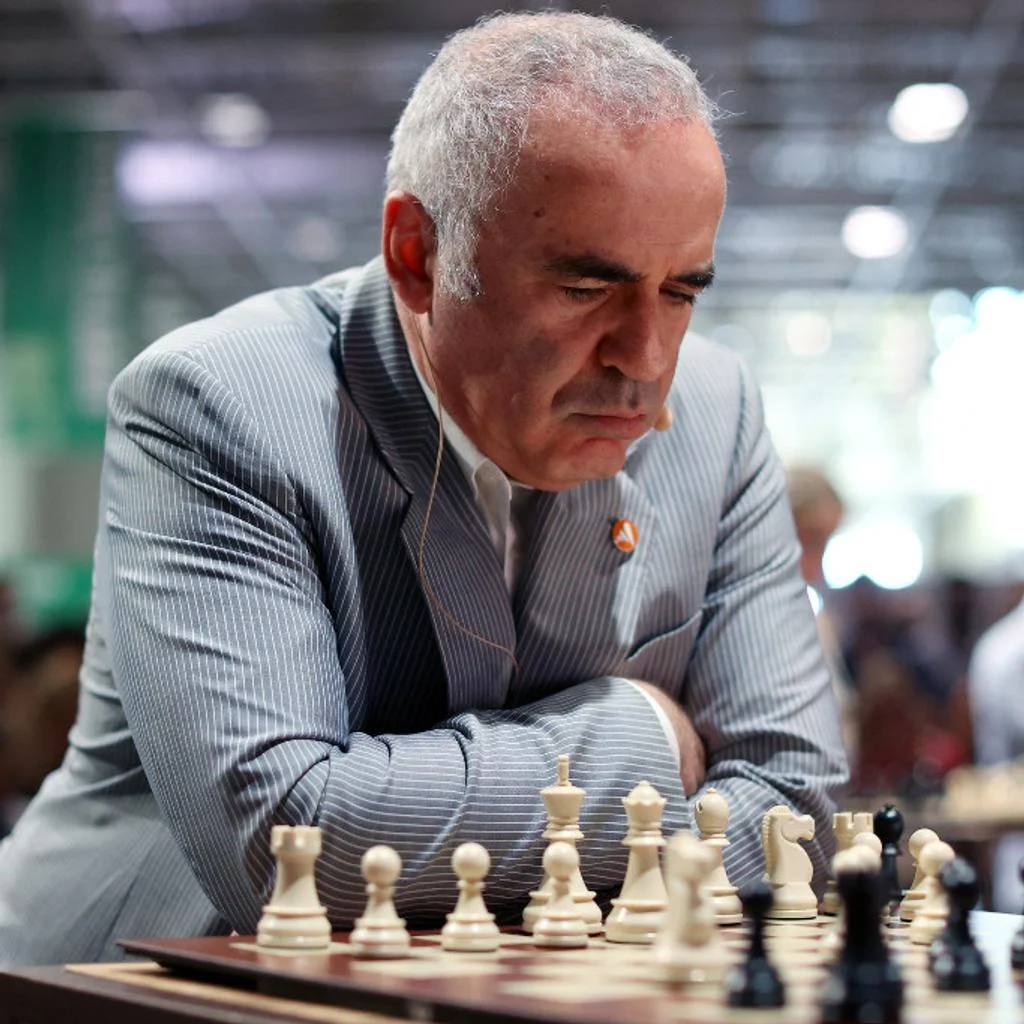
Garry Kasparov was born in Baku, Azerbaijan, in the Soviet Union, and displayed exceptional talent in chess from an early age. He began playing chess at the age of six, guided by his father, who recognized his potential. Kasparov's early training came under the tutelage of his mother, who enrolled him in a chess school to nurture his skills.
Kasparov's prodigious talent became apparent when he won the Soviet Junior Championship at the age of ten. His rapid rise through the ranks of junior chess tournaments was marked by several notable victories. By the age of twelve, he was already a force to be reckoned with, demonstrating a level of skill and understanding of the game that surpassed many of his peers.
At fourteen, Kasparov entered the prestigious Tigran Petrosian Chess School, where he continued to hone his skills under the guidance of experienced coaches. His dedication and hard work paid off as he quickly rose to prominence, achieving his first major tournament victory and earning the title of International Grandmaster by the age of seventeen.
Garry Kasparov's rise to prominence in the chess world was marked by a series of impressive achievements. His breakthrough came in 1985 when, at the age of 22, he defeated Anatoly Karpov to become the youngest World Chess Champion in history. This victory established him as a formidable force in the chess community and marked the beginning of his dominance over the chess world.
Throughout the late 1980s and early 1990s, Kasparov's exceptional performances in various tournaments further cemented his status as the world's top player. His intense rivalries, particularly with Karpov, captivated the chess world and brought widespread attention to the game. Kasparov's innovative strategies and aggressive playstyle set him apart from his contemporaries, making him a dominant figure in international chess.
Kasparov's prominence continued to grow as he successfully defended his title in multiple World Chess Championship matches. His victories over challengers from various countries showcased his versatility and adaptability as a player. His dominance in the chess world during this period was marked by his ability to consistently outmaneuver his opponents and maintain a high level of performance in diverse competitive settings.
Garry Kasparov first became the World Chess Champion in 1985 by defeating Anatoly Karpov. This victory was a landmark achievement in his career, establishing him as the youngest player ever to hold the title. Kasparov's reign as World Champion was characterized by his aggressive and innovative approach to the game, which set new standards for chess strategy.
Kasparov successfully defended his title in several World Chess Championship matches, including a notable victory over Karpov in their 1986 rematch. His ability to maintain his championship status through numerous defenses was a testament to his exceptional skill and preparation. Kasparov's reign continued as he retained his title in the 1990, 1993, and 1995 championships.
In 2000, Kasparov lost the title to Vladimir Kramnik, marking the end of his remarkable tenure as World Chess Champion. Despite this, his contributions to chess and his legacy as one of the greatest players of all time have remained influential. Kasparov's impact on the game continues to be felt through his innovative play and enduring achievements.
Focuses on long-term strategic advantages, optimal piece placement, and control of key squares.
Emphasizes sharp, aggressive play with a focus on short-term calculations, combinations, and sacrifices.
Adapts quickly to changing positions, often taking calculated risks to create imbalances.
Develops long-term plans and strategies, often focusing on the gradual improvement of position.
Versatile, capable of switching between different playing styles based on the situation and opponent.
Garry Kasparov's achievements in chess are extensive and highly prestigious. He holds the record for the highest FIDE rating ever achieved, with a peak rating of 2851. Kasparov has won numerous international tournaments, including the Linares and Tilburg tournaments, often considered among the strongest chess events.
His dominance in the World Chess Championship is marked by his successful defenses of the title from 1985 to 2000. Kasparov's victories over top-level competitors and his innovative contributions to chess theory have set benchmarks for future generations of players. He has also been a prominent figure in computer chess, famously competing against the IBM computer Deep Blue in a series of high-profile matches.
Kasparov's influence extends beyond the chessboard, as he has authored several influential books on chess and has been involved in various political and social causes. His legacy in chess is defined by his exceptional skill, strategic brilliance, and significant contributions to the game's development.
Outside of chess, Garry Kasparov has been active in various fields, including politics, writing, and public speaking. After retiring from professional chess, he became involved in political activism, advocating for democratic reforms in Russia and participating in opposition movements. His political engagements have made him a prominent figure in the global political arena.
Kasparov is also a prolific writer, having authored several books on chess and political topics. His works provide insights into his experiences as a chess champion and his views on global issues. Kasparov's contributions to literature and public discourse have further established him as a significant intellectual figure.
In addition to his political and literary endeavors, Kasparov has been involved in various charitable activities and has worked to promote chess education worldwide. His efforts to support and develop the game, particularly among young players, reflect his ongoing commitment to the chess community.
Garry Kasparov was born in Baku, Azerbaijan, and grew up with his parents, Kim and Clara Kasparov. His family played a crucial role in his early development, providing support and encouragement for his chess career. Kasparov's personal life has been characterized by his dedication to both his professional pursuits and his personal interests.
Kasparov is known for his intense focus and commitment to chess, but he also enjoys a variety of personal interests, including reading, writing, and political activism. His diverse interests and active involvement in public life reflect a well-rounded and engaged personality. Kasparov has been married twice and has a daughter from his first marriage.
In his free time, Kasparov enjoys traveling and exploring different cultures, which has contributed to his broad perspective on the world. His experiences and interests outside of chess have enriched his life and continue to shape his contributions to various fields.
A fun fact about Garry Kasparov is that he once played a simultaneous exhibition against 24 opponents while blindfolded, demonstrating his extraordinary memory and concentration skills. This impressive feat highlighted his exceptional mental prowess and dedication to the game.
Additionally, Kasparov's rivalry with Anatoly Karpov is legendary in the chess world, with their matches often referred to as some of the most intense and exciting in history. Their battles not only captivated chess enthusiasts but also significantly shaped the development of modern chess strategies.
Search for another top-rated chess player (a player rated over 2500) and discover more insights into these players' mindsets and ideologies.