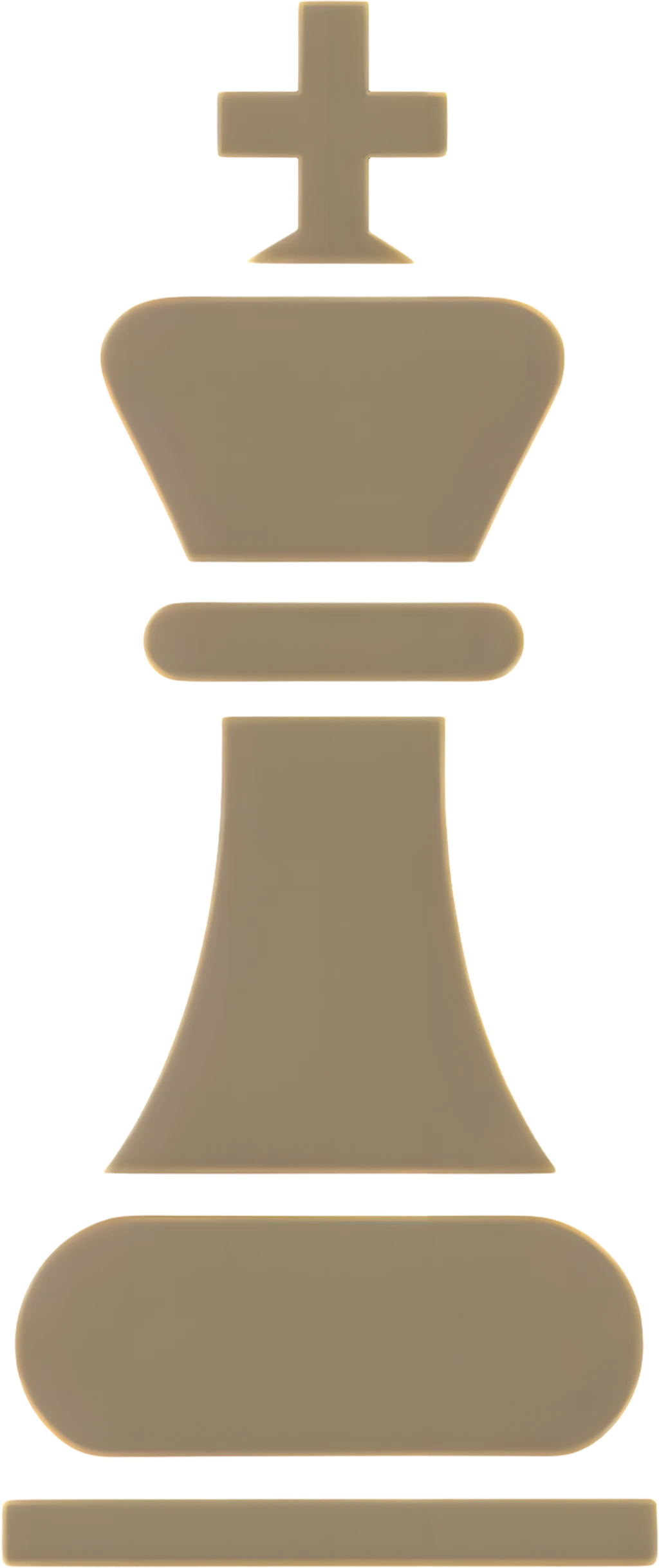
The king is the most important piece in chess, as its capture results in a loss. It can move one square in any direction, making it a versatile but limited piece. The king is the heart of the game, and its safety is highly prioritized.
The king is most effective when it is protected and not exposed to threats. Players must be cautious about the king's safety, especially during the opening and middlegame phases, to avoid getting checkmated.
The king moves one square in any direction: horizontally, vertically, or diagonally. This limited range makes the king a vulnerable piece, especially in the opening and middlegame.
The king cannot move into check, meaning it must always stay out of reach of enemy pieces. This restriction adds to the king's vulnerability, as it often needs protection from other pieces.
The king is the most important piece; if checkmated, the game ends, making protection and positioning crucial throughout all phases.
Castling safeguards the king by moving it behind pawns while activating a rook, combining defense with improved piece coordination in one move.
The king is fragile during the middlegame, where powerful attacks can target its defenses, so careful pawn structure and vigilance are essential.
When queens and rooks are gone, the king becomes a powerful attacker, moving toward the center to support pawns and restrict opponents.
In pawn endgames, the king uses opposition to control key squares, outmaneuver the opponent, and decide races that determine promotion outcomes.
Castling is a single, defensive move which is used to move the king out of the center of the board, while bringing the rook into the game.
It can only be done by the king, if the king and rook have not moved, and there are no pieces with line of sight in the path of the castle.
Castling is the only move in the game which allows a player to move two pieces during one move!
A fork is a tactic which involves attacking two undefended or higher valued pieces at the same time, forcing the opponent to make a tough decision.
Although rare, the king can actually fork pieces (except the king and queen) if placed correctly!
In endgames, opposition refers to the position where two kings stand on the same rank, file, or diagonal with an odd number of squares between them.
The player who moves their king into opposition can control key squares and limit the movement of the opposing king. This is because the opposing king cannot move into the squares controlled by the player's king without putting itself in check.