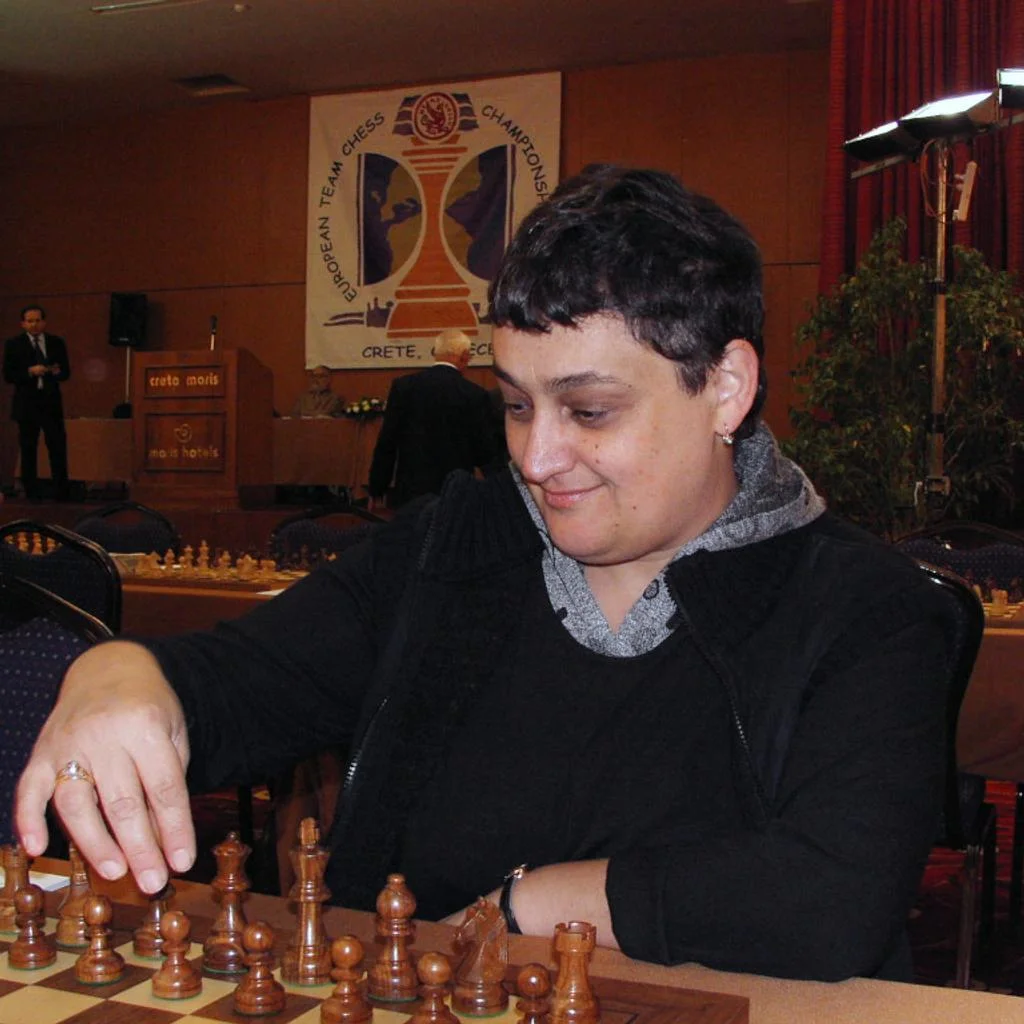
Maia Chiburdanidze was born on January 17, 1961, in Kutaisi, Georgia. She began playing chess at the age of eight, inspired by her older brothers who played the game. Maia's talent for chess became evident quickly, and her parents supported her pursuit by finding her a coach. By the age of 12, Maia was already competing in national tournaments and winning titles.
Growing up in Georgia, a country with a rich chess tradition, Maia had access to excellent training and competitive opportunities. Her early successes included winning the Georgian Women's Championship at the age of 15. This victory was a clear indicator of her potential to compete at the highest levels of the game.
Maia's dedication to chess during her formative years was unwavering. She balanced her academic responsibilities with her chess training, demonstrating discipline and a strong work ethic. These early experiences laid a solid foundation for her future achievements in the chess world.
Maia Chiburdanidze's rise to prominence in the chess world began with her remarkable performances in youth and national competitions. Her breakthrough came in 1976 when she won the Soviet Women's Chess Championship at the age of 15, making her the youngest champion in the event's history. This victory catapulted her into the international spotlight.
In 1978, Maia achieved a historic milestone by becoming the Women's World Chess Champion at the age of 17, defeating Nona Gaprindashvili. Her victory made her the youngest Women's World Champion at that time and established her as a dominant force in women's chess. She successfully defended her title four times, solidifying her legacy as one of the greatest female chess players.
Maia's consistent high-level performances in international tournaments, including the Chess Olympiads, further cemented her status as a top player. Her strategic depth, tactical precision, and ability to perform under pressure were key factors in her rise to prominence. Maia's success inspired a new generation of chess players, particularly in Georgia, and contributed to the growth of women's chess globally.
Maia Chiburdanidze became the Women's World Chess Champion in 1978 at the age of 17, defeating the reigning champion Nona Gaprindashvili. This victory marked the beginning of a dominant era in women's chess. Maia successfully defended her title four times, in 1981, 1984, 1986, and 1988, showcasing her exceptional skill and resilience.
During her reign as world champion, Maia demonstrated her ability to adapt to different opponents and playing styles. Her strategic brilliance and deep understanding of the game allowed her to maintain her dominance in women's chess for over a decade. Her victories in world championship matches were characterized by decisive games and tactical ingenuity.
Maia's impact as world champion extended beyond her individual achievements. She played a crucial role in promoting women's chess and inspiring young players around the world. Her legacy as a world champion is defined not only by her victories on the board but also by her contributions to the growth and recognition of women's chess globally.
Focuses on long-term strategic advantages, optimal piece placement, and control of key squares.
Develops long-term plans and strategies, often focusing on the gradual improvement of position.
Emphasizes sharp, aggressive play with a focus on short-term calculations, combinations, and sacrifices.
Focuses on solid, cautious play, prioritizing the safety of the king and the solidity of the position.
Versatile, capable of switching between different playing styles based on the situation and opponent.
Maia Chiburdanidze's career is adorned with numerous achievements and records. She became the Women's World Chess Champion in 1978 at the age of 17 and successfully defended her title four times. Her peak FIDE rating of 2560 places her among the top female chess players in history. Maia's consistent high-level performances in international tournaments, including the Chess Olympiads, have earned her numerous accolades and solidified her reputation as one of the greatest female players of all time.
In addition to her world championship titles, Maia has won multiple Soviet and Georgian Women's Championships. Her contributions to team events have been instrumental in securing gold medals for the Soviet Union and later Georgia in Chess Olympiads. Maia's achievements extend beyond tournament victories, as she has been a role model for young chess players and an advocate for women's chess.
Maia's impact on the chess community is profound. She has inspired countless young players to pursue the game with passion and dedication. Her legacy continues to influence aspiring chess players, particularly in Georgia, where she is celebrated as a national hero and a pioneer in women's chess.
Off the board, Maia Chiburdanidze is known for her contributions to chess education and promotion. She has been involved in various initiatives aimed at nurturing young talent and promoting chess in schools and communities. Maia regularly participates in chess camps, training sessions, and lectures, sharing her knowledge and experience with aspiring players.
Maia is also an advocate for gender equality in chess and has worked with various organizations to promote women's participation in the sport. Her efforts have helped raise awareness about the challenges faced by female chess players and have contributed to creating a more inclusive environment in the chess community. Maia's dedication to promoting chess and supporting young talent reflects her commitment to giving back to the chess world.
In addition to her chess-related activities, Maia enjoys studying history and literature. She believes that a well-rounded education enhances her understanding of the world and complements her chess career. Maia's off-the-board contributions reflect her multifaceted personality and her dedication to making a positive impact beyond the chessboard.
In her personal life, Maia Chiburdanidze is known for her humility and dedication to her family and community. Despite her numerous achievements, she remains grounded and values the support of her loved ones. Maia enjoys spending time with her family and often credits them for their unwavering support throughout her career. Her close-knit family has been a source of strength and encouragement, helping her navigate the challenges of a professional chess career.
Outside of chess, Maia has a keen interest in history and literature. She spends her free time reading and exploring historical sites, finding inspiration and relaxation in these activities. Her academic pursuits highlight her commitment to continuous learning and personal growth.
Maia also values physical fitness and enjoys outdoor activities such as hiking and swimming. She believes that maintaining a healthy lifestyle is crucial for mental and physical well-being. Her disciplined approach to life and her ability to balance her personal interests with her professional commitments serve as an inspiration to many aspiring chess players.
A fun fact about Maia Chiburdanidze is that she is an accomplished cook and enjoys preparing traditional Georgian dishes. Her culinary skills are well-known among her family and friends, and she often hosts gatherings where she showcases her cooking talent. Cooking provides Maia with a creative outlet and a way to relax from the intensity of competitive chess.
Another interesting fact is that Maia is an avid gardener. She finds joy in cultivating her garden, growing a variety of flowers and vegetables. Gardening allows her to connect with nature and provides a peaceful retreat from her busy chess schedule. Maia's love for gardening reflects her appreciation for beauty and her nurturing spirit.
Search for another top-rated chess player (a player rated over 2500) and discover more insights into these players' mindsets and ideologies.