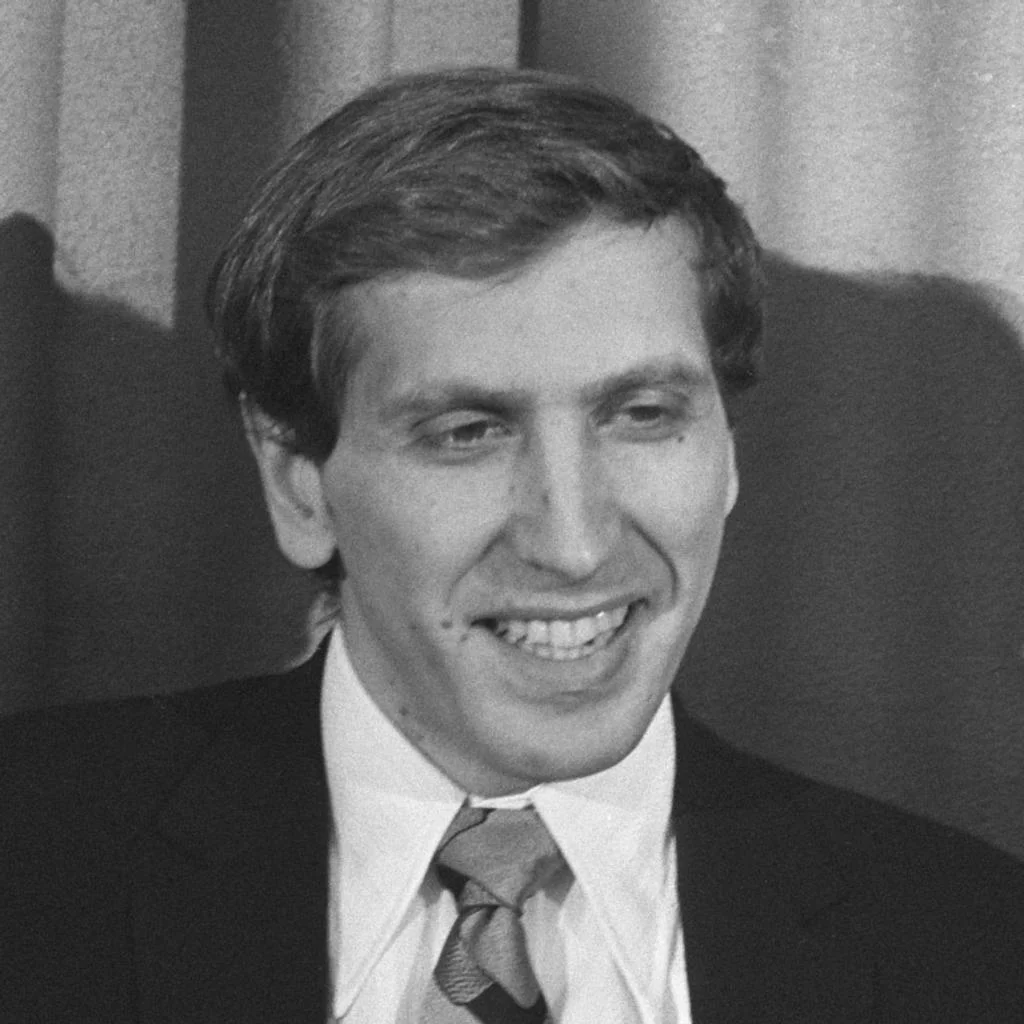
Robert James Fischer, also known as Bobby Fischer, was born on March 9, 1943, in Chicago, Illinois. His chess journey began early, influenced by his mother, who introduced him to the game at the age of six. Fischer's rapid mastery of the game was evident as he quickly became a standout player in local chess tournaments.
As a child growing up in Brooklyn, New York, Fischer's chess prowess became increasingly apparent. He began to make waves in the chess community with his exceptional skill and unconventional approaches. By the age of 14, he had already claimed the title of United States Chess Champion, a remarkable achievement that underscored his emerging talent.
Fischer's early life was marked by a singular focus on chess, driven by an innate ability and relentless practice. His early victories and innovative play laid the groundwork for his future success and established him as a prodigious talent in the world of chess.
Bobby Fischer's rise to prominence began in the late 1950s and early 1960s. His breakthrough moment came in 1964 when he won the United States Chess Championship with an unprecedented score of 11-0, setting a record that highlighted his dominance and precision.
The pivotal moment in Fischer's career came in 1972 when he challenged and defeated Boris Spassky in the World Chess Championship held in Reykjavik, Iceland. This match, often referred to as the 'Match of the Century,' was not only a personal triumph for Fischer but also a major cultural event that brought global attention to chess.
Fischer's success was marked by his innovative strategies and his ability to outthink his opponents in high-pressure situations. His victory over Spassky ended the long-standing Soviet dominance in chess and cemented his status as one of the greatest chess players of all time.
Bobby Fischer achieved the pinnacle of chess success when he won the World Chess Championship in 1972. His victory over Boris Spassky in Reykjavik was a historic moment, as it ended a period of Soviet dominance in the world of chess and marked the first time an American player won the title.
The 1972 World Championship match was notable for its high level of play and Fischer's extraordinary preparation. Fischer's innovative tactics and psychological strategies played a crucial role in his success, showcasing his deep understanding of the game.
Following his championship win, Fischer's involvement in competitive chess became less frequent, but his impact on the game remained profound. His contributions to chess theory and his unique approach to the game have left an enduring legacy in the chess world.
Prioritizes attacking the opponent's king and creating complications to pressure the opponent.
Emphasizes sharp, aggressive play with a focus on short-term calculations, combinations, and sacrifices.
Adapts quickly to changing positions, often taking calculated risks to create imbalances.
Develops long-term plans and strategies, often focusing on the gradual improvement of position.
Bobby Fischer's achievements and records stand as a testament to his extraordinary skill and impact on chess. He became a Grandmaster in 1958 and achieved a peak FIDE rating of 2785, reflecting his dominance in the chess world.
One of Fischer's most notable achievements is his victory in the 1972 World Chess Championship, where he defeated Boris Spassky in a match that captivated the world. In addition to this, Fischer won the United States Chess Championship a record eight times, including a remarkable perfect score of 11-0 in 1964.
Fischer's contributions to chess extend beyond his tournament successes. He is known for his development of Fischer Random Chess and his profound influence on modern chess strategy and theory. His achievements and records have solidified his reputation as one of the greatest chess players in history.
Outside of chess, Bobby Fischer was a highly complex and enigmatic figure. After his peak years, he withdrew from the public eye and lived in various countries, including Iceland, where he spent his final years. His reclusiveness and controversial statements during this period added to his enigmatic persona.
Fischer's interests extended beyond chess; he was deeply involved in studying and analyzing chess theory and variants. His development of Fischer Random Chess, also known as Chess960, reflects his innovative thinking and desire to explore new dimensions of the game.
Despite his controversial later years, Fischer's contributions to chess and his impact on the game remain widely recognized. His legacy continues to influence the world of chess, and his innovative approach and achievements are celebrated by chess enthusiasts and professionals alike.
Bobby Fischer's personal life was marked by both brilliance and complexity. Born in Chicago and raised in Brooklyn, New York, Fischer's early life was dominated by his intense dedication to chess. His family played a crucial role in supporting his career, but his later years were characterized by increasing isolation and eccentricity.
Fischer's reclusiveness and unconventional behavior became more pronounced as he aged. He lived in various countries, including Iceland, where he spent his final years. Despite his withdrawal from the public eye, Fischer remained an influential figure in chess, and his impact on the game continued to be felt.
Throughout his life, Fischer's passion for chess remained a central focus. His extraordinary achievements and innovative contributions to the game continue to be remembered and celebrated, solidifying his legacy as one of the greatest chess players in history.
A fun fact about Bobby Fischer is that he once played a 20-board simultaneous exhibition against strong opponents and won all 20 games, showcasing his exceptional skill and endurance.
Another interesting fact is that Fischer's 1972 World Championship match against Boris Spassky was not only a significant chess event but also a major cultural moment. The match was widely covered in the media and is often credited with significantly increasing global interest in chess.
Search for another top-rated chess player (a player rated over 2500) and discover more insights into these players' mindsets and ideologies.