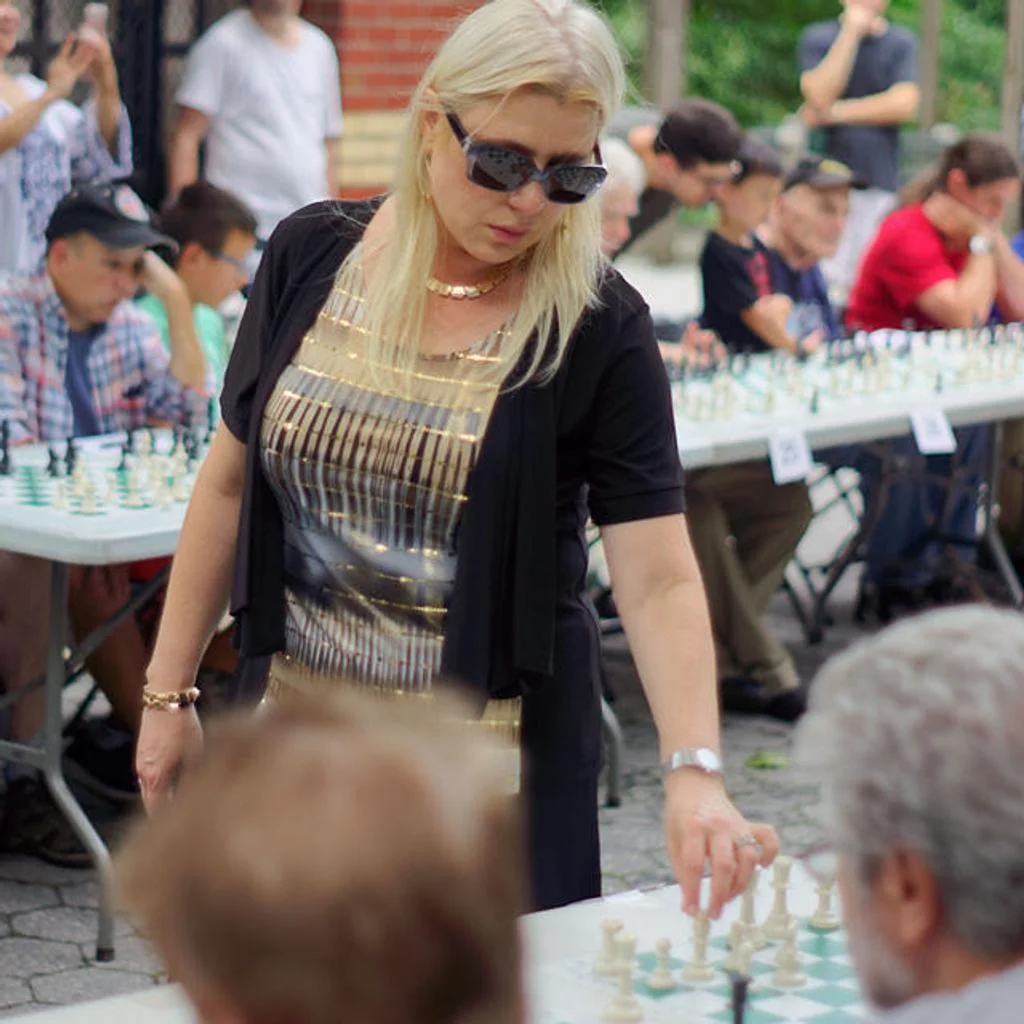
Susan Polgar, born Zsuzsanna Polgár on April 19, 1969, in Budapest, Hungary, was introduced to chess at a very young age by her father, László Polgár. László believed that geniuses are made, not born, and he decided to test his theory with his daughters by teaching them chess. Susan's prodigious talent quickly became evident, and by the age of 4, she won her first chess tournament.
Growing up in a family dedicated to chess, Susan's childhood was filled with rigorous training and intellectual challenges. Her sisters, Judit and Sofia Polgar, also became world-class chess players, and the Polgar sisters were known for their exceptional skills and accomplishments. This environment of intense training and competition helped Susan develop a deep understanding of chess strategy and tactics from an early age.
By the time she was a teenager, Susan had already achieved significant milestones, including becoming the top-rated female player in the world at the age of 15. Her early life was marked by a combination of hard work, family support, and an unwavering dedication to mastering the game of chess.
Susan Polgar's rise to prominence in the chess world began with her victories in youth competitions and her rapid ascent in the international rankings. In 1981, at the age of 12, she won the World Under-16 Girls' Championship, establishing herself as a formidable young talent. This victory was a precursor to her future successes on the global stage.
In 1991, Susan made history by becoming the first woman to earn the Grandmaster title through conventional tournament play. This groundbreaking achievement shattered gender barriers in chess and paved the way for future generations of female players. Her success in mixed-gender tournaments demonstrated her ability to compete at the highest levels and inspired many young girls to take up the game.
Susan's dominance in women's chess was further solidified with her victories in the Women's World Chess Championship in 1996. Her strategic brilliance, combined with her ability to handle high-pressure situations, made her a formidable opponent. Her rise to prominence was characterized by her pioneering spirit, her dedication to excellence, and her role as a trailblazer for women in chess.
Susan Polgar achieved one of the highest honors in chess by winning the Women's World Chess Championship in 1996. Her victory was a testament to her exceptional skill, strategic understanding, and mental fortitude. This championship win solidified her status as one of the leading figures in women's chess and brought her international acclaim.
During her reign as world champion, Susan demonstrated her ability to dominate her opponents with a blend of tactical acumen and strategic depth. Her success in the championship was marked by decisive victories and her ability to outmaneuver some of the best female players in the world. This achievement was a culmination of years of hard work, rigorous training, and a deep passion for the game.
Susan's impact as a world champion extended beyond her individual achievements. She used her platform to promote chess education and advocate for greater opportunities for women in chess. Her legacy as a world champion is not only defined by her victories on the board but also by her contributions to the growth and development of chess globally.
Focuses on long-term strategic advantages, optimal piece placement, and control of key squares.
Develops long-term plans and strategies, often focusing on the gradual improvement of position.
Emphasizes sharp, aggressive play with a focus on short-term calculations, combinations, and sacrifices.
Prioritizes attacking the opponent's king and creating complications to pressure the opponent.
Adapts quickly to changing positions, often taking calculated risks to create imbalances.
Susan Polgar's career is adorned with numerous achievements and records. She became the top-rated female player in the world at the age of 15 and went on to win the Women's World Chess Championship in 1996. Her peak FIDE rating of 2577 places her among the top female chess players in history.
In addition to her world championship title, Susan has won multiple prestigious tournaments and accolades. She was the first woman to earn the Grandmaster title through conventional tournament play, breaking significant gender barriers in the chess world. Her consistent high-level performances in both women's and mixed-gender tournaments have earned her a reputation as one of the best female players of all time.
Susan has also been a key figure in promoting chess education and popularizing the game worldwide. She has authored numerous books, developed educational programs, and founded the Susan Polgar Institute for Chess Excellence (SPICE). Her contributions to chess education and her efforts to foster new talent have had a lasting impact on the chess community.
Off the board, Susan Polgar has made significant contributions to chess education and promotion. She is the founder of the Susan Polgar Institute for Chess Excellence (SPICE) at Webster University, which aims to promote chess as an educational tool and to develop new talent. Through SPICE, Susan has organized numerous tournaments, training sessions, and outreach programs to bring chess to a wider audience.
Susan is also an accomplished author, having written several books on chess strategy and education. Her writings have been widely acclaimed for their clarity and insight, making complex concepts accessible to players of all levels. Her books and educational programs have been instrumental in popularizing chess and providing valuable resources for players and coaches.
In addition to her work in education, Susan is a passionate advocate for gender equality in chess. She has campaigned for greater opportunities and support for female players, working with various organizations to create a more inclusive environment. Her efforts have helped raise awareness and improve conditions for women in chess, inspiring many to pursue the game at a high level.
In her personal life, Susan Polgar is known for her dedication to her family and her passion for chess education. Despite her numerous achievements, she remains humble and focused on giving back to the chess community. Susan is a mother of two sons, and she often credits her family for their unwavering support throughout her career.
Outside of chess, Susan enjoys a variety of activities, including reading, traveling, and spending time with her family. She is fluent in multiple languages, including Hungarian, English, and Spanish, which has helped her connect with the global chess community. Her multicultural background and diverse interests enrich her perspective and approach to life.
Susan's commitment to continuous learning and personal growth is evident in her academic pursuits. She holds a degree in Physical Education and has completed various courses in psychology and education. Her holistic approach to life, balancing her professional commitments with her personal interests, serves as an inspiration to many aspiring chess players and educators.
A fun fact about Susan Polgar is that she was the first woman to qualify for the Men's World Chess Championship in 1986. This remarkable achievement showcased her exceptional talent and broke significant gender barriers in the chess world.
Another interesting fact is that Susan is an avid fan of soccer. She enjoys watching soccer matches and often supports her favorite teams with great enthusiasm. Her love for soccer reflects her appreciation for sports and her understanding of the strategic and tactical elements that are common to both chess and soccer.
Search for another top-rated chess player (a player rated over 2500) and discover more insights into these players' mindsets and ideologies.