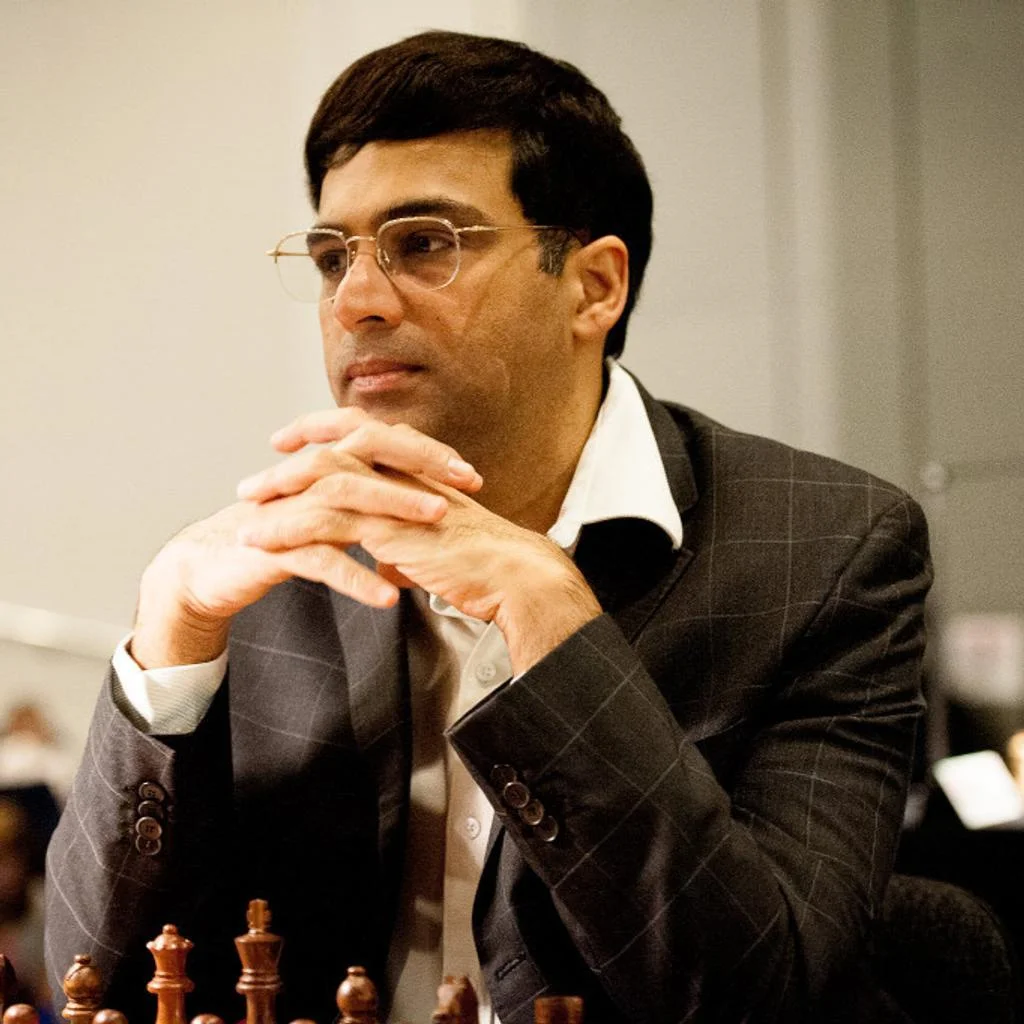
Viswanathan Anand was born in Mayiladuthurai, Tamil Nadu, India. His family moved to Chennai when he was young, where he began to show an early interest in chess. His mother, Susheela, taught him the game at the age of six, and he quickly developed a passion for it. Anand's exceptional talent was evident from a young age, and he rapidly progressed through the ranks of Indian chess.
In his early years, Anand's quick and intuitive style of play earned him the nickname 'Lightning Kid'. He dominated national youth championships and soon began to compete internationally. By the age of fourteen, he had become the national sub-junior chess champion, and at sixteen, he became the youngest Indian to earn the title of International Master.
Anand's early successes set the stage for his future career. In 1987, he won the World Junior Chess Championship, becoming the first Indian to achieve this feat. This victory propelled him into the international spotlight and established him as one of the brightest young talents in the chess world. His rapid rise continued, and by 1988, he had earned the title of Grandmaster, becoming the first Indian to do so.
Viswanathan Anand's rise to prominence in the international chess scene began in the 1990s. In 1991, he won the Reggio Emilia tournament, ahead of several top players, including Garry Kasparov and Anatoly Karpov. This victory marked a significant milestone in his career and established him as a leading contender in the global chess arena.
Anand's breakthrough came in 2000 when he won the FIDE World Chess Championship by defeating Alexei Shirov in the final. This victory made him the first Indian to become the official World Chess Champion, a title he would hold multiple times throughout his career. His success in 2000 was followed by a series of strong performances in elite tournaments, solidifying his position among the world's top players.
In 2007, Anand won the World Chess Championship tournament in Mexico City, becoming the undisputed World Champion. He successfully defended his title in 2008, 2010, and 2012, defeating Vladimir Kramnik, Veselin Topalov, and Boris Gelfand, respectively. Anand's reign as World Champion and his consistent performances in top-level competitions established him as one of the greatest chess players of all time.
Viswanathan Anand's tenure as World Chess Champion is marked by several significant achievements. He first won the title in 2000 and then reclaimed it in 2007, becoming the undisputed World Champion. His ability to defend his title against formidable opponents like Vladimir Kramnik, Veselin Topalov, and Boris Gelfand showcased his exceptional skill and versatility as a player.
Anand's victory in the 2007 World Chess Championship tournament in Mexico City was particularly notable. He finished the tournament undefeated, demonstrating his dominance in the field. His successful defenses of the title in subsequent years further cemented his legacy as a champion. In 2010, he defeated Veselin Topalov in a closely contested match held in Sofia, Bulgaria. Two years later, he defended his title against Boris Gelfand in Moscow, winning the rapid tiebreakers after the classical games ended in a tie.
Although Anand lost the title to Magnus Carlsen in 2013, his legacy as a five-time World Chess Champion remains unparalleled. His contributions to chess, both as a player and as an ambassador for the sport, have left an indelible mark on the history of the game. Anand's achievements have inspired a new generation of chess players in India and around the world.
Focuses on long-term strategic advantages, optimal piece placement, and control of key squares.
Adapts quickly to changing positions, often taking calculated risks to create imbalances.
Emphasizes sharp, aggressive play with a focus on short-term calculations, combinations, and sacrifices.
Versatile, capable of switching between different playing styles based on the situation and opponent.
Viswanathan Anand's achievements and records in chess are numerous and impressive. He is a five-time World Chess Champion, having won the title in 2000, 2007, 2008, 2010, and 2012. His victories in these championships, against some of the strongest players in the world, have established him as one of the greatest chess players of all time.
Anand has also been successful in various elite tournaments. He has won the prestigious Linares tournament multiple times, as well as the Corus (now Tata Steel) tournament in Wijk aan Zee. His consistent performances in top-level competitions have kept him at the forefront of the chess world for decades. His peak FIDE rating of 2817 is among the highest ever achieved, underscoring his exceptional skill and competitiveness.
In addition to his individual successes, Anand has played a significant role in popularizing chess in India. His achievements have inspired countless young players in his home country, leading to a chess boom in India. Anand's contributions to chess extend beyond his playing career, as he continues to be an active ambassador for the sport, promoting chess education and participating in various initiatives to grow the game globally.
Off the chessboard, Viswanathan Anand is known for his humility and dedication to promoting chess. He has been actively involved in various initiatives to popularize chess, particularly in India. Anand has worked with several organizations to introduce chess in schools, believing in its educational benefits and its ability to develop critical thinking and problem-solving skills in young people.
Anand is also a prolific author, having written several books on chess. His works include instructional books as well as autobiographical accounts of his career. Through his writings, Anand has shared his insights and experiences with a wider audience, helping to inspire and educate aspiring chess players. His contributions to chess literature are highly regarded and have added to his legacy as a champion of the game.
In his personal life, Anand enjoys a variety of interests outside of chess. He is an avid reader, with a particular interest in history and science fiction. Anand also enjoys spending time with his family, and he values the support they have provided throughout his career. His well-rounded personality and his contributions to chess promotion and education make him a respected and beloved figure in the chess community.
Viswanathan Anand was born and raised in a close-knit family in Chennai, India. His mother, Susheela, played a significant role in his early development as a chess player, teaching him the game and encouraging his passion. Anand's family's support was crucial in his journey to becoming a world-class chess player. Their belief in his potential and their encouragement helped him navigate the challenges of his early career.
Anand is married to Aruna, who has been a constant source of support throughout his career. The couple has a son, Akhil, and they maintain a close-knit family life. Despite the demands of his professional career, Anand has always placed a high value on his family relationships. His family's support has been instrumental in his success and has provided him with the stability needed to compete at the highest levels.
Anand's personal life is marked by his humility and grounded nature. He is known for his modesty and his respectful demeanor, both on and off the chessboard. Despite his numerous achievements, Anand remains approachable and down-to-earth, qualities that have endeared him to fans and fellow players alike. His balanced approach to life and his commitment to his family and career serve as an inspiration to many.
A fun fact about Viswanathan Anand is that he has a deep love for reading, particularly enjoying history and science fiction books. He often reads to relax and unwind during tournaments.
Another interesting fact is that Anand is a fan of Tamil cinema. He enjoys watching movies in his native language and often talks about how watching films helps him relax and take his mind off the pressures of competitive chess.
Search for another top-rated chess player (a player rated over 2500) and discover more insights into these players' mindsets and ideologies.